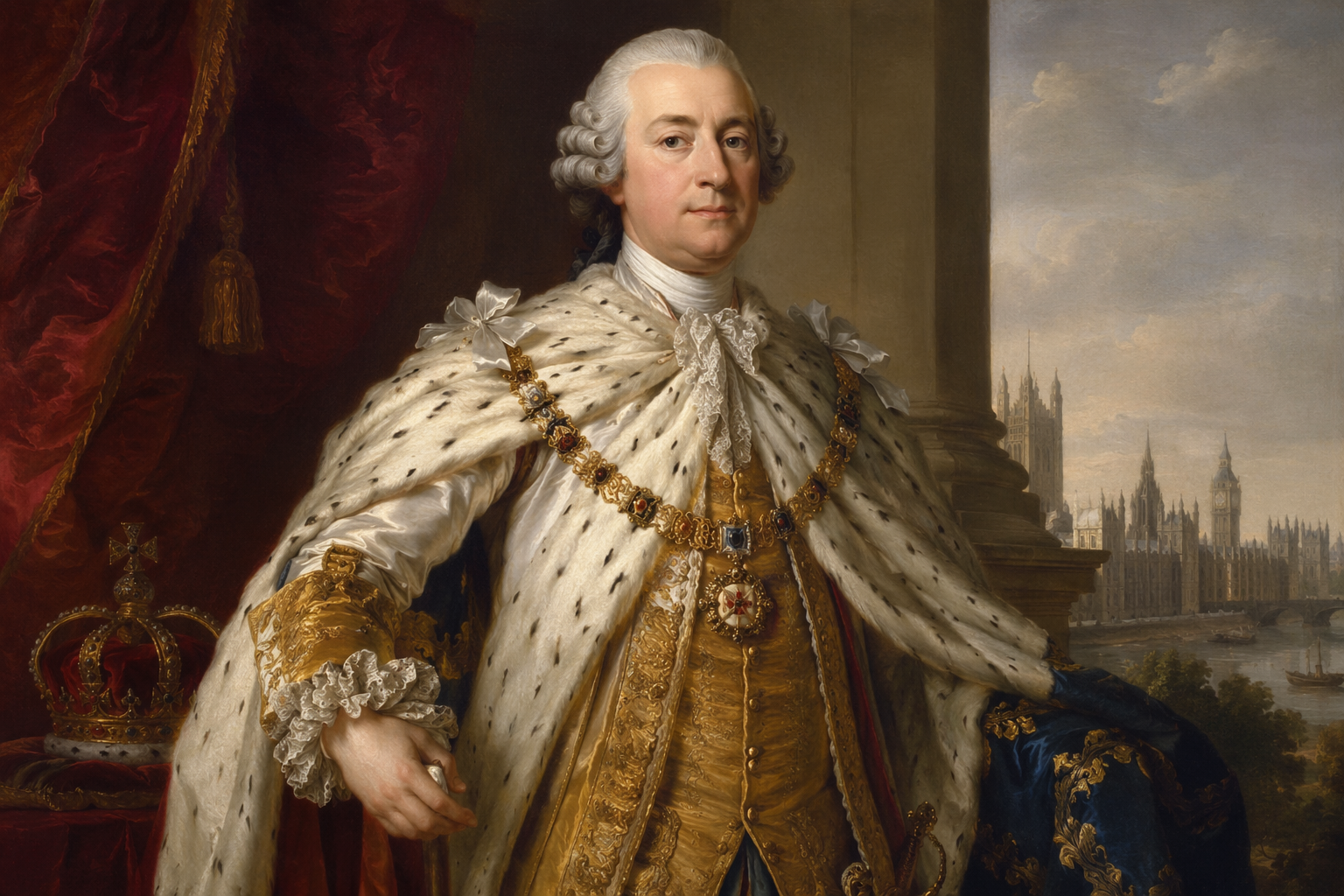
George I History Timeline and Biographies
Back to Discover Person · English

George I

George I of Great Britain

George I was the first monarch of the House of Hanover, ruling Great Britain from 1714 to 1727.

Creation Time:2026-07-04 9 key nodes English

The Timeline

1660 — 1727

  1. 1660

    Birth of George I

    George I was born on May 28, 1660, in Hanover, Germany. He was the son of Ernest Augustus, Duke of Cumberland, and Sophia of the Palatinate. His lineage connected him to the English royal family through his grandmother, Elizabeth Stuart.

  2. 1708

    George's Ascendancy

    In 1708, George I was appointed as the elector of Hanover. This position significantly increased his political influence in both Germany and England. His connection to the English crown made him a key figure in shifting political alliances.
  3. 1714

    Accession to the Throne

    George I ascended to the British throne on August 1, 1714, following the death of Queen Anne. His ascension marked the beginning of the Hanoverian dynasty in Britain. He faced initial resistance but established his rule through political maneuvering.
  4. 1715

    Suppression of Jacobite Rising

    In 1715, George I dealt with the Jacobite Rising, which aimed to restore the Stuart monarchy. His government successfully suppressed the rebellion, solidifying his position. This event showcased the political tensions of the time between the supporters of the monarchy and parliament.
  5. 1717

    Formation of the First Ministry

    In 1717, George I's government saw the formation of the first official ministry led by Sir Robert Walpole. This marked a shift towards a more organized parliamentary system. Walpole's leadership helped stabilize George's reign amid political challenges.
  6. 1720

    South Sea Bubble Crisis

    The South Sea Bubble crisis erupted in 1720, causing financial turmoil and public unrest. George I's government faced criticism for its handling of the crisis. The event highlighted the vulnerabilities of early 18th-century finance and governance.
  7. 1721

    Walpole's Dominance

    By 1721, George I had established Sir Robert Walpole as the dominant figure in his cabinet. This period marked the rise of the modern parliamentary system in Britain. Walpole's influence allowed George to focus on foreign affairs and royal duties.
  8. 1725

    Treaty of Hanover

    The Treaty of Hanover was signed in 1725, securing an alliance between Britain and Prussia. This treaty was crucial for George I's foreign policy, strengthening Britain's position in Europe. It reflected his desire to maintain Hanoverian interests abroad.
  9. 1727

    Death of George I

    George I died on June 11, 1727, in Osnabrück, Germany. His death marked the end of his reign, which lasted 13 years. He was succeeded by his son, George II, continuing the Hanoverian dynasty's rule in Britain.

Regeneration always requests fresh AI content and uses 1 query.

Download History Timeline