World War II History Timeline and Biographies
Back to Discover Event · English

World War II

World War II was a global conflict that lasted from 1939 to 1945, involving most of the world's nations.

Creation Time:2026-09-05 10 key nodes English

The Timeline

1939 — 1945

  1. 1939

    Invasion of Poland

    On September 1, 1939, Germany invaded Poland, marking the beginning of World War II in Europe. This invasion prompted Britain and France to declare war on Germany, leading to a widespread conflict across the continent.
  2. 1940

    Fall of France

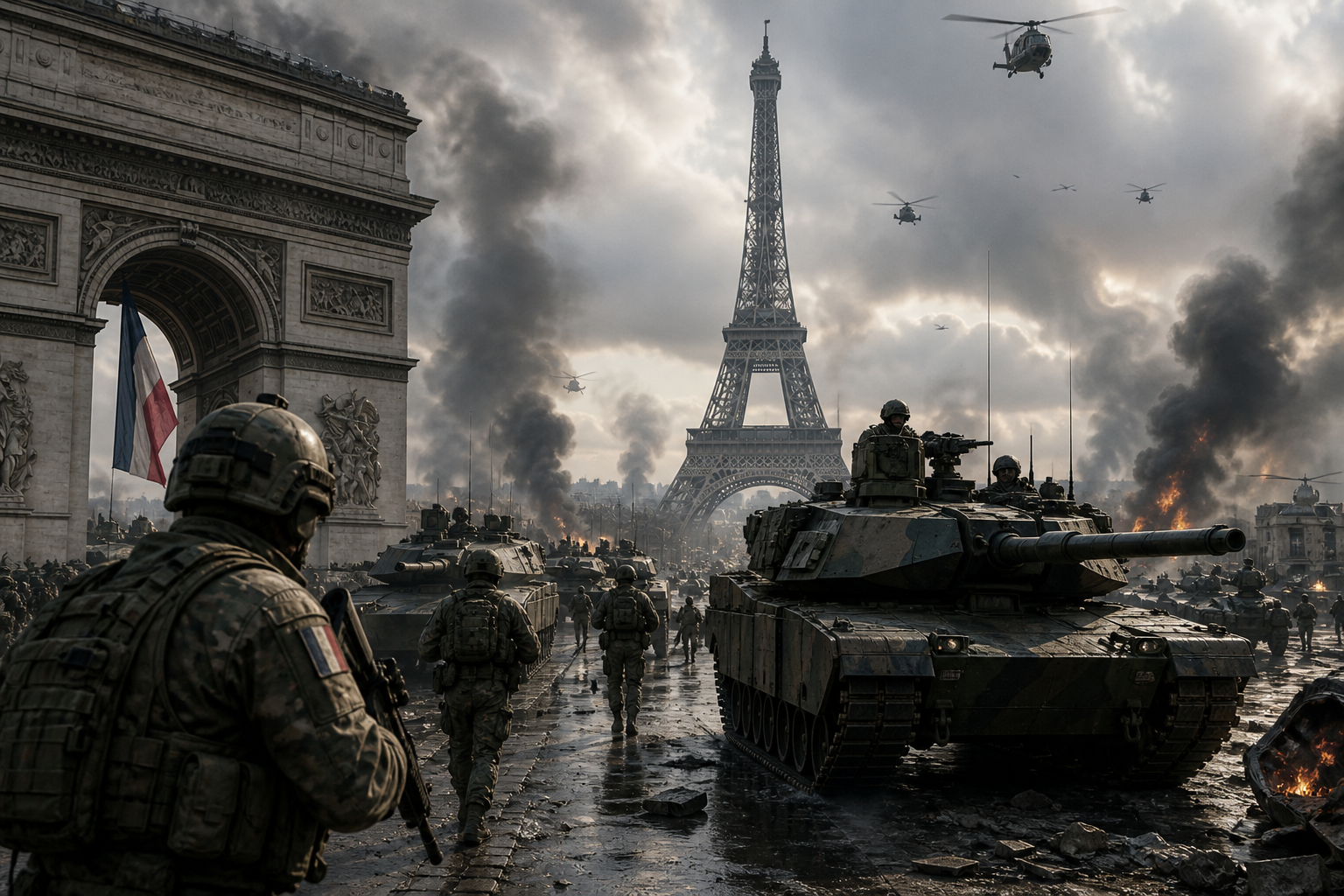
    In May 1940, Germany launched a blitzkrieg against France, resulting in a swift defeat and occupation by June. The fall of France shocked the Allies and altered the balance of power in Europe.
  3. 1941

    Operation Barbarossa

    On June 22, 1941, Nazi Germany invaded the Soviet Union in a campaign known as Operation Barbarossa. This marked the largest military operation in history and opened the Eastern Front, which would become a critical theater of war.
  4. 1941

    Pearl Harbor Attack

    On December 7, 1941, Japan launched a surprise attack on the U.S. naval base at Pearl Harbor, Hawaii. This attack led to the United States formally entering the war, significantly bolstering the Allied powers.
  5. 1942

    Battle of Stalingrad

    The Battle of Stalingrad began in August 1942 and lasted until February 1943, marking a turning point in the war. The Soviet victory decisively halted the German advance into the Soviet Union and began a series of offensives that would push the Germans back.
  6. 1944

    D-Day

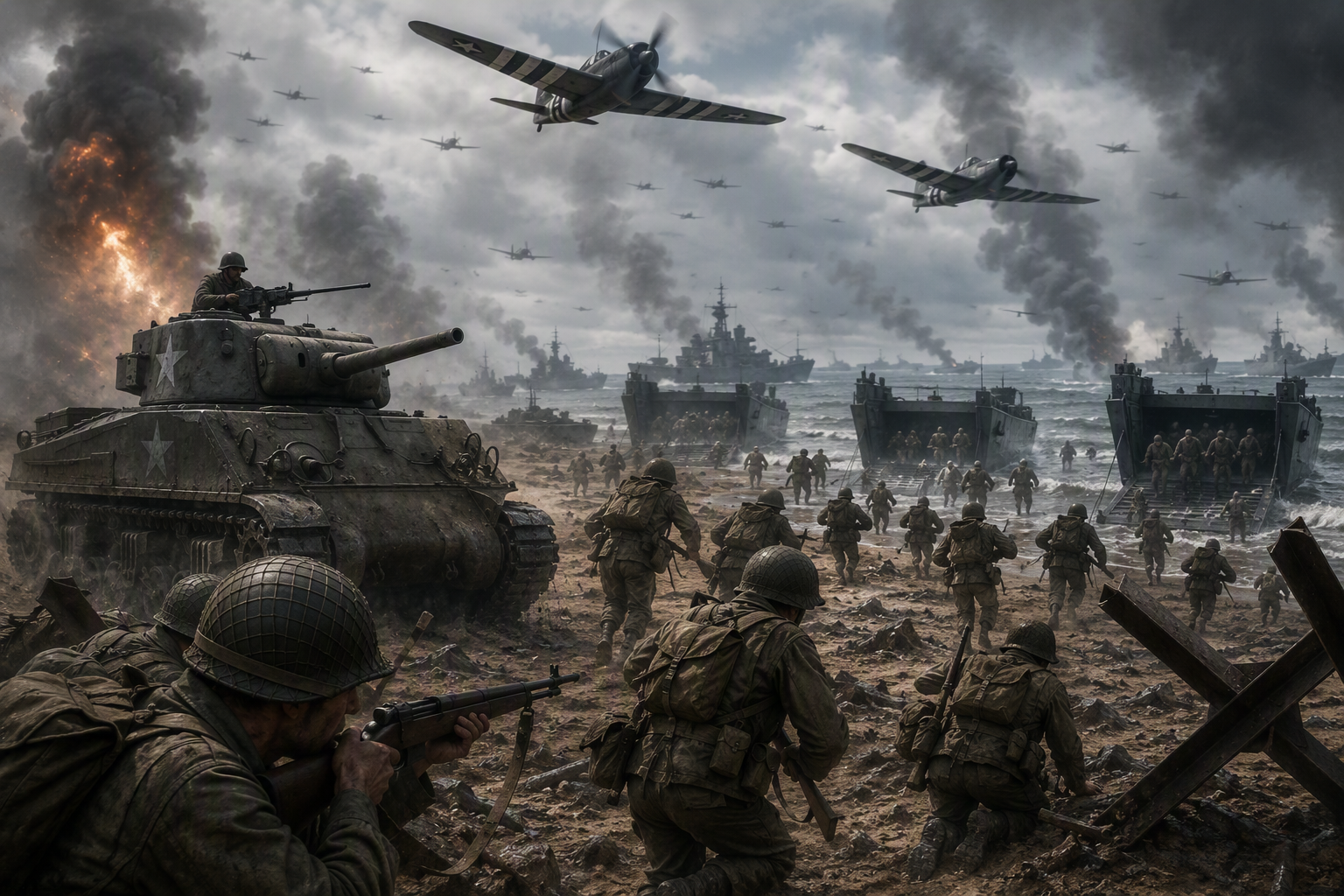
    On June 6, 1944, Allied forces launched Operation Overlord, known as D-Day, with a massive invasion of Normandy, France. This operation was crucial in establishing a foothold in Europe and marked the beginning of the liberation of Western Europe from Nazi control.
  7. 1944

    Liberation of Concentration Camps

    As Allied forces advanced in 1944, they began liberating concentration camps across Europe. These liberations revealed the full extent of the Holocaust and the atrocities committed by the Nazi regime.
  8. 1945

    Yalta Conference

    In February 1945, Allied leaders Franklin D. Roosevelt, Winston Churchill, and Joseph Stalin met at the Yalta Conference. They discussed the post-war reorganization of Europe and the strategy to defeat Japan, setting the stage for the Cold War.
  9. 1945

    Atomic Bombings of Hiroshima and Nagasaki

    On August 6 and August 9, 1945, the United States dropped atomic bombs on the Japanese cities of Hiroshima and Nagasaki. These bombings led to Japan's unconditional surrender and the end of World War II.
  10. 1945

    End of World War II

    World War II officially ended on September 2, 1945, when Japan formally surrendered aboard the USS Missouri. The war resulted in significant geopolitical changes and laid the groundwork for the United Nations and the Cold War.

Regeneration always requests fresh AI content and uses 1 query.

Download History Timeline