Constantinople History Timeline and Biographies
Back to Discover Other · English

Constantinople

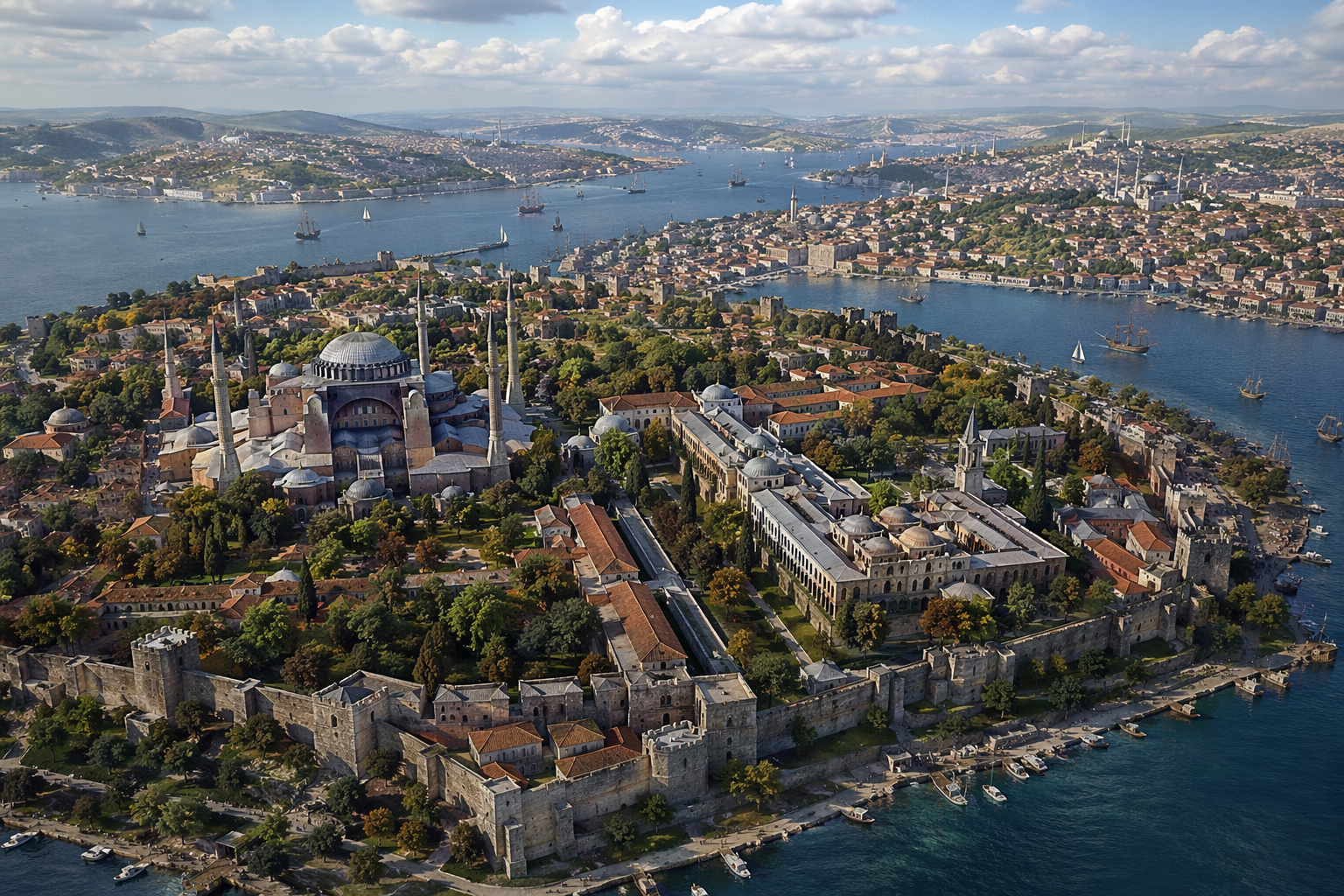
Constantinople, a city of immense historical significance, served as a bridge between cultures and empires.

Creation Time:2026-07-04 11 key nodes English

The Timeline

330 — 2023

  1. 330

    Foundation of Constantinople

    Constantinople was founded by Emperor Constantine the Great, who aimed to create a new Rome. The city was strategically located on the Bosporus Strait, making it a vital trade and military hub. Its establishment marked the beginning of a new era for the Roman Empire.

  2. 395

    Becomes Capital of the Eastern Roman Empire

    After the division of the Roman Empire, Constantinople became the capital of the Eastern Roman Empire, also known as the Byzantine Empire. This status solidified its importance in politics, culture, and commerce in the region.
  3. 537

    Construction of Hagia Sophia

    The Hagia Sophia was completed under the reign of Emperor Justinian I, symbolizing the architectural and cultural achievements of the Byzantine Empire. It served as a cathedral for nearly a thousand years and is renowned for its massive dome and stunning mosaics.
  4. 1204

    Fourth Crusade and Sack of Constantinople

    During the Fourth Crusade, Constantinople was sacked by Crusader forces in 1204, leading to significant looting and destruction. This event marked a major setback for the Byzantine Empire and resulted in a fragmented city under Latin rule.
  5. 1261

    Recapture by the Byzantines

    The Byzantines regained control of Constantinople in 1261, restoring it as the capital of the Byzantine Empire. This period saw a revival of cultural and economic activity, although the empire remained weakened.
  6. 1453

    Fall of Constantinople

    Constantinople fell to the Ottoman Empire on May 29, 1453, marking the end of the Byzantine Empire. Sultan Mehmed II transformed the city into a thriving center of Islamic culture and governance, renaming it Istanbul.
  7. 1923

    Establishment of the Republic of Turkey

    The Republic of Turkey was established, officially marking the end of the Ottoman Empire. Istanbul became the largest city in the new republic, undergoing significant modernization and westernization.
  8. 1955

    Istanbul Pogrom

    A violent pogrom against the Greek minority occurred in Istanbul, reflecting the ethnic tensions within the city. This event led to significant demographic changes and the decline of the Greek community in the city.
  9. 1985

    Hagia Sophia Designated a UNESCO World Heritage Site

    Hagia Sophia was designated a UNESCO World Heritage Site, recognizing its outstanding universal value. This designation has helped preserve the site and promote its historical significance to a global audience.
  10. 2020

    Hagia Sophia Converted Back to Mosque

    In July 2020, a Turkish court annulled Hagia Sophia's status as a museum, converting it back into a mosque. This decision sparked international debate regarding cultural heritage and religious significance.
  11. 2023

    Istanbul Today

    Istanbul continues to be a vibrant metropolis, blending its rich historical past with modernity. The city remains a cultural and economic hub, attracting millions of tourists each year and serving as a bridge between East and West.

Regeneration always requests fresh AI content and uses 1 query.

Download History Timeline